

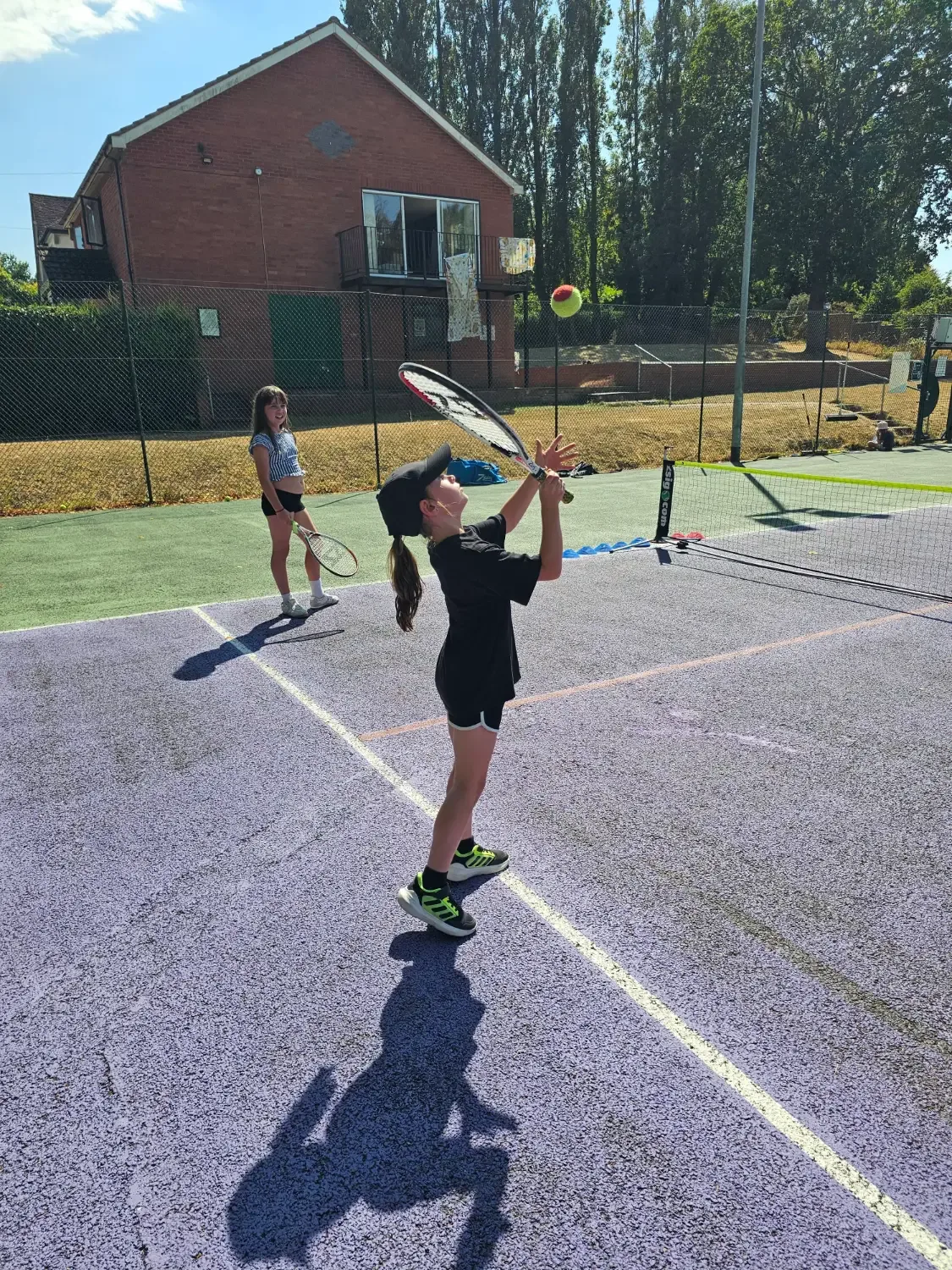
For many children, the serve can feel like one of the hardest parts of tennis. There is a ball toss, a racket swing, a target to aim for and a whole point waiting to begin.
It is also one of the most valuable skills to practise.
The serve is the only shot in tennis that no one else can practise for you. Before every point, the server has time to get ready, choose a target and begin the action. It is the one shot where the player is fully in control of the start.
That is why building good serving habits through youth tennis lessons can make such a difference. A child does not need to serve hard straight away. They need to learn the movement, find a rhythm and enjoy the feeling of starting a point for themselves.
At MH Tennis, we coach children from age 3 upwards in South Birmingham. Through the LTA Youth programme, we introduce serving in a way that is suitable for each child’s age, stage and experience.
The serve starts every point
A player can hit a brilliant forehand or produce an excellent backhand, but they cannot use either shot until the point has started.
The serve begins every point. It gives the player an opportunity to take control from the very first ball and make a positive decision about where the game will go next.
For younger children, this does not mean expecting a full adult-style serve. A serve might begin with an underarm action, a gentle overarm throw or a ball hit from a closer distance. The important thing is that the child starts to understand:
- Where to stand
- How to prepare
- How to toss or release the ball
- How to swing safely
- Where to aim
- What happens after the serve
These simple foundations become increasingly useful as the child grows and develops.
The serve is the one shot a player owns
During a rally, players have to react to what someone else has done. The opponent decides the speed, height, direction and spin of the incoming ball.
The serve is different.
The player can take a breath, choose a target and begin the movement when they are ready. Of course, the opponent can return the serve, but the starting action belongs entirely to the server.
That sense of control can be especially important for children. It helps them feel that they have an active role in the point rather than waiting to react.
This is one reason the serve can help develop independence. A child learns to take responsibility for the start of the point, make a decision and try again if the first attempt does not work.
That process builds useful habits well beyond tennis.
Early practice creates lasting habits
Children are often excellent learners because they are still developing their coordination and movement patterns. Introducing serve skills early gives them plenty of time to learn gradually, without feeling that everything has to be perfect.
The aim is not to rush young players into using a full-size racket on a full-size court. The aim is to give them the right challenge at the right time.
In the LTA Youth stages, the equipment and court adapt as children develop. Younger players use age-appropriate balls, rackets and court sizes, making it easier to control the ball and understand the action. As they grow in confidence, the activities can progress towards more complete serves and match play.
This makes tennis feel achievable.
A child who learns to serve through small, successful steps is more likely to see serving as a normal part of tennis. A child who only meets the serve later, when the court and equipment feel much bigger, may find it more difficult to build confidence.
Early practice is not about creating pressure. It is about creating familiarity.
Rhythm and coordination come before power
When adults watch tennis, it is easy to focus on how fast a serve travels. For young players, power should not be the first goal.
A good serve begins with rhythm and coordination.
Children need to learn how their hands, arms, eyes, legs and body work together. They need to develop the timing to release the ball, move the racket and make contact. This takes patience and repetition.
A simple serving action may include:
- Starting in a balanced position
- Holding the ball and racket comfortably
- Releasing or tossing the ball in a controlled way
- Reaching up with the racket
- Making a smooth swing
- Finishing in a balanced position
The movement may look small at first, but it is building the foundations for the future.
Trying to hit harder before the movement is ready can make serving feel rushed and difficult. A smooth, repeatable action is a much better starting point. Speed can develop later as strength, timing and confidence improve.
Short, regular practice is more helpful than occasional long sessions
Children do not need to spend an hour serving to make progress. In fact, short and regular practice is often more effective.
A few minutes of focused activity can help a child remember the movement without becoming tired or frustrated. This could be part of a weekly tennis lesson or a short practice at home.
For example, a child might practise:
- Ten controlled ball releases
- Ten throwing actions
- A few shadow swings without a ball
- Serving towards a nearby target
- Catching the ball after a gentle toss
- Serving into a large, easy-to-hit area
The goal is to finish with the child feeling successful and keen to try again.
Regular repetition helps the movement become more familiar. It also makes it easier for a coach to notice what is improving and decide what to introduce next.
Building the chopper grip and pronation
As children grow in confidence with the serve, we also start building towards the chopper grip, also known as the continental grip. This is the grip we want for serving and volleys, and it can feel a little unusual at first because it is more like holding a racket as if it were an axe or chopper rather than a frying pan. That is completely normal. We introduce it gradually so children can become comfortable with the shape and feel of it over time.

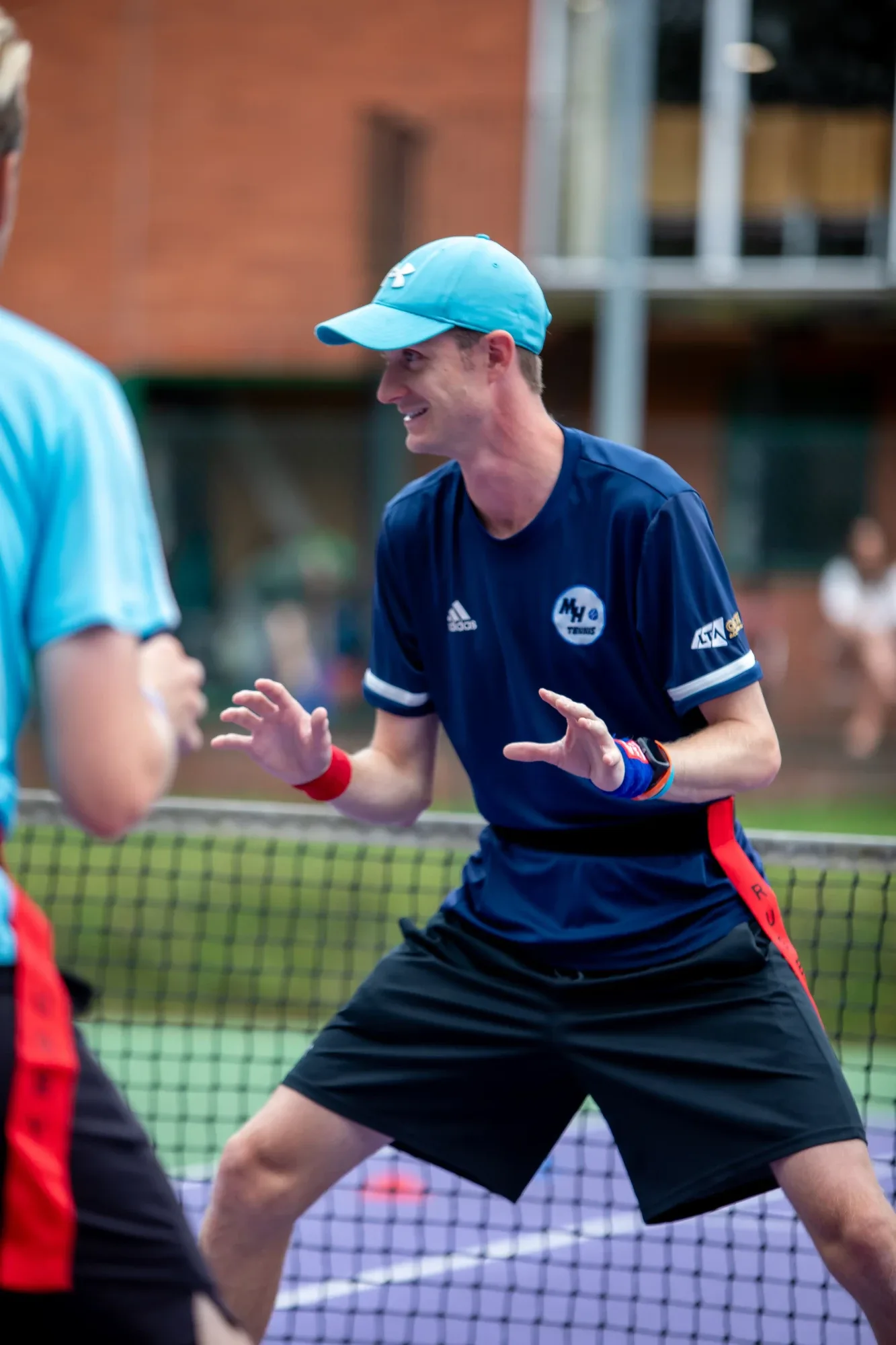
A big part of serve power comes from pronation, which is the natural inward rotation of the forearm as the racket swings up and through the ball. Rather than forcing this action, we develop it through fun, simple drills that help children feel the rotation and release for themselves. A relaxed arm and a loose grip make a big difference here. Like all good serving habits, this is built little by little through play, repetition and confidence, and never rushed before the child is ready.
Simple serve practice at home
Parents do not need a tennis court, a ball machine or specialist equipment to support serving habits. A safe space, a tennis ball and a few minutes can be enough. Here are some simple ideas.

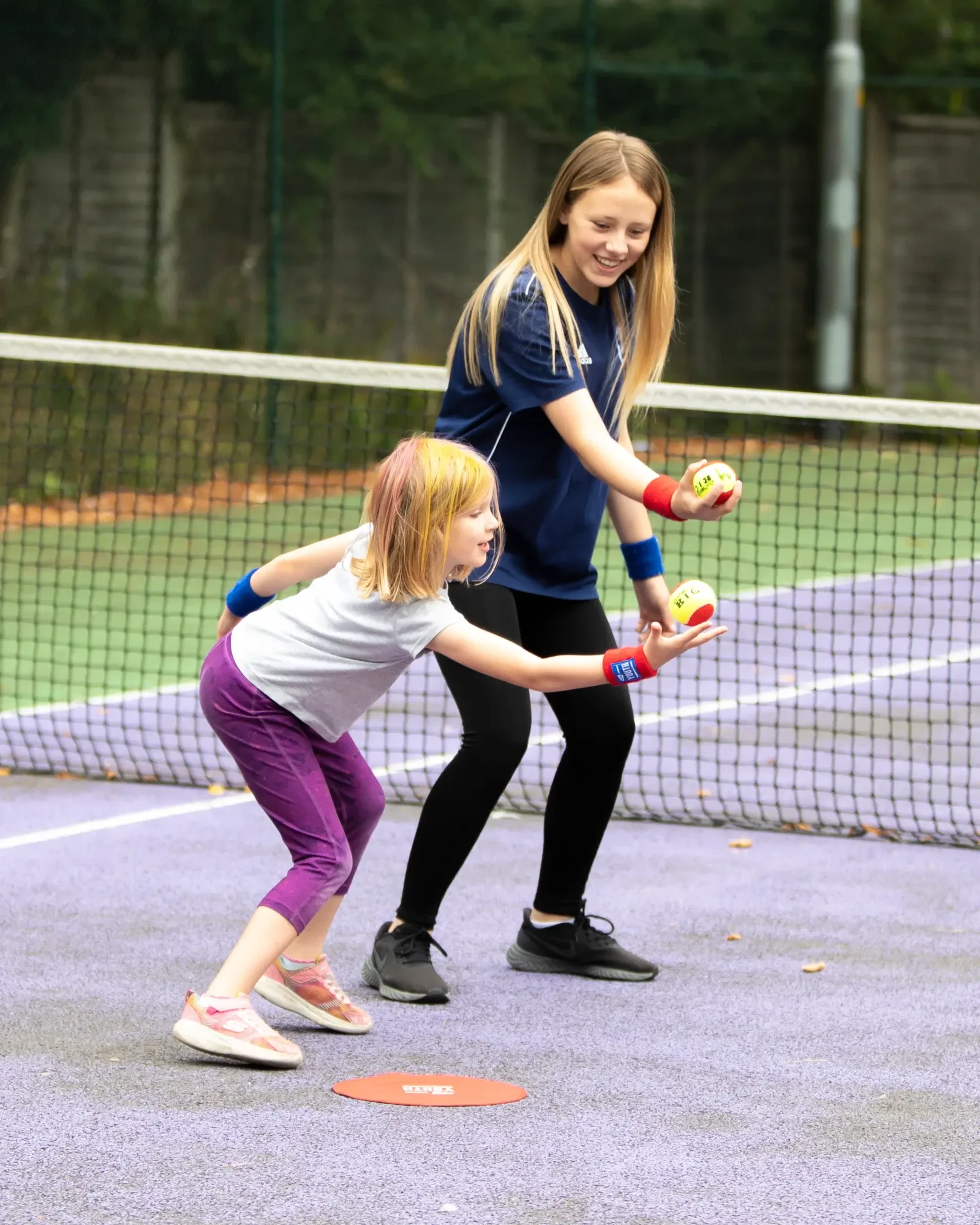
Throwing and catching
Ask your child to throw a soft ball upwards and catch it with the same hand. This helps develop control and confidence with the release.
You can also practise throwing the ball upwards and slightly forwards, as long as there is plenty of space and the activity is safe.
Ball tosses
The toss is an important part of the serve. Encourage your child to practise releasing the ball rather than throwing it too high.
The aim is not to make every toss identical straight away. It is to help the child learn to release the ball calmly and watch it as it rises and falls.
Shadow swings
A shadow swing is a serving action without hitting a ball. Your child can practise the movement with a racket, or even with their hand if they are very young.
This helps them focus on balance, rhythm and the shape of the swing without worrying about making contact.
Use a target
If you have a safe outdoor space, place a target on the ground or choose a clear area to aim towards. The target could be a hoop, a cone or a marked spot.
Keep the distance suitable for your child. A closer target creates more successful attempts and helps serving remain enjoyable.
Always prioritise safety. Make sure there is plenty of room, avoid practising near windows or other people, and stop if your child becomes tired.
Serving teaches independence and resilience
Every player misses serves, including experienced adults and professional players. Learning to respond to a missed serve is part of learning to play tennis.
The server starts each point alone. That can feel challenging, but it also gives children an opportunity to practise independence.
They learn to:
- Prepare themselves
- Make a decision
- Try the action
- Accept the result
- Reset and try again
These are valuable life skills. A child does not need every serve to go in to feel successful. They can learn that progress comes from staying calm, making a small adjustment and having another go.
This is where serving connects closely with our youth-first approach. We want children to improve their tennis, but we also want them to build confidence, self-esteem, resilience and happy memories on court.
How MH Tennis introduces serving
At MH Tennis, serving is introduced through age-appropriate games and activities rather than one difficult technical exercise.
Children from age 3 upwards can begin developing the movement skills that support serving. Younger players may work on throwing, catching, balance and coordination. As they progress, they can explore overarm actions, racket swings and serving towards simple targets.
Our coaching follows the LTA Youth stages, with activities adapted to suit the child. The right ball, racket and court size can make a major difference. When the equipment matches the player, children have a better chance to control the ball and understand the game.
MH Tennis is an LTA Youth Recognised Venue based in South Birmingham. We provide a welcoming place for children to learn, play and keep progressing through tennis.

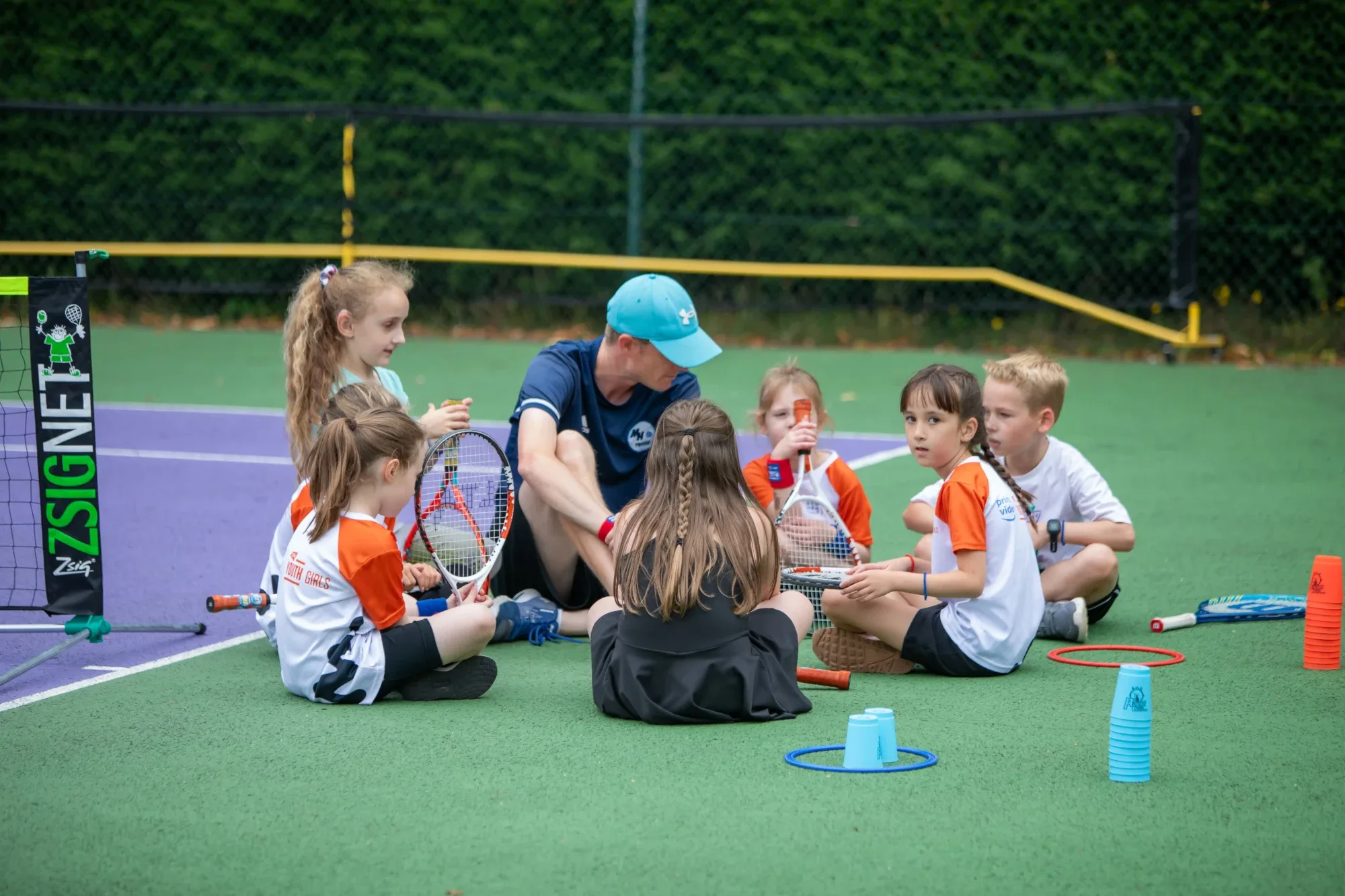
We also took part in the Prime Video LTA Youth Girls programme, an LTA initiative designed to help more girls get involved in tennis and enjoy their time on court. Alongside this, our Get Set Girl project focuses on keeping girls aged 11 to 16 involved in sport as they move into secondary school. Creating positive experiences, friendships and confidence is just as important as developing technical skills.
Finding the right tennis lessons for your child
If you are looking for tennis lessons for beginners, it is worth finding a programme that introduces skills progressively and keeps children engaged.
The best youth coaching is not about rushing towards power or competition. It is about helping a child feel comfortable with the racket, understand the ball and enjoy being active.
If you are searching for tennis coaching Birmingham, tennis lessons Birmingham or local Birmingham tennis activities, look for a welcoming environment where your child can learn at their own pace.
At MH Tennis, we offer group and individual coaching across South Birmingham for children, young people and adults. You can learn more about our LTA Youth stages, explore our coaching options or book youth sessions.
A strong serve does not appear overnight. It grows through small, positive repetitions. Start with rhythm, coordination and enjoyment, and the confidence to serve will develop one step at a time.